Comfort vs. Discomfort (Part 1)
| Category | Socio-Emotional Development |
| Copyright Owner and Year | Compassion International, 2024 |
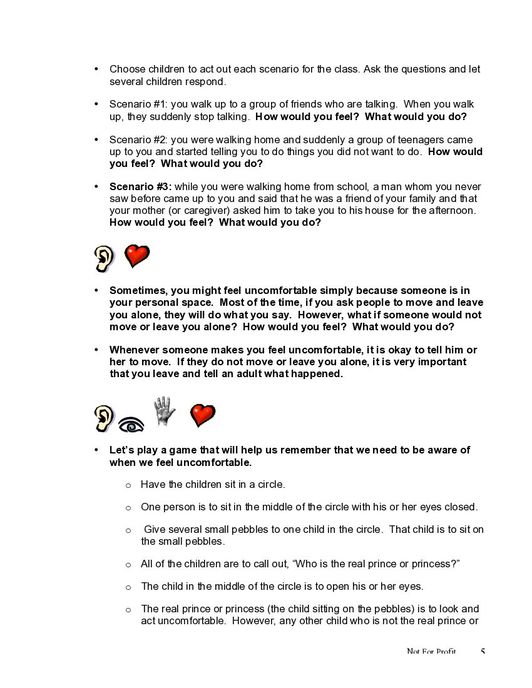
The lesson “Comfort vs. Discomfort (Part 1)” teaches children about identifying the feelings of comfort and discomfort in a situation and what to do when things feel uncomfortable or dangerous. The children each describe a situation in which he or she is uncomfortable and then name at least two people to ask for help in the situation. The children demonstrate appropriate responses to an uncomfortable situation, for example: calling for help or running away. The lesson includes guided instructions for the teacher, including preparation, a script, and suggested activities to facilitate further learning in a fun and interactive manner. This lesson is designed for children between 9-11 years, and is the 17th lesson in the 1st year Core Curriculum Set and part of the “Advocacy” unit.
Related Documents
-
Getting Help for a Friend
The lesson “Getting Help for a Friend” teaches children more about healthy relationship development and both social and self-awareness in… -
Developing a Safety Plan
The lesson “Developing a Safety Plan” teaches children about the importance of assuming personal responsibility in order to maintain and … -
Good Secrets vs. Bad Secrets
The lesson “Good Secrets vs. Bad Secrets” teaches children more about self and social awareness, specifically about refusal and how to ef… -
Assertive Vocabulary
The lesson “Assertive Vocabulary” teaches children more about personal responsibility and the healthy development of Godly character thro… -
Good Touch vs. Bad Touch
The lesson “Good Touch vs. Bad Touch” teaches children to assume personal responsibility and the obligation to engage in Biblical and saf… -
Developing Healthy Personal Boundaries
The lesson “Developing Healthy Personal Boundaries” teaches children about healthy and compassionate interpersonal relationships and how … -
Comfort vs. Discomfort (Part 2)
The lesson “Comfort vs. Discomfort (Part 2)” teaches children about self and social awareness, the managing of emotions and feelings, and… -
Being a Genuine and Honest Friend
The lesson “Being a Genuine and Honest Friend” teaches children more about healthy relationship development and both social and self-awar… -
Assertive Vocabulary
The lesson “Assertive Vocabulary” teaches children the ability to verbalize at least three assertive words or phrases in response to some… -
Good Touch vs. Bad Touch
The lesson “Good Touch vs. Bad Touch” teaches children how to distinguish between good touches and bad touches. The children understand a…